Overview
New Zealand and the Philippines already share a lot of people. The 2023 Census counted 108,297 Filipinos in New Zealand, up 49 percent in five years and the fastest-growing group in the country's Asian population. Hiring from the Philippines is the same relationship run in the other direction, and it raises three practical questions that the usual arguments about cost and English never answer: what time is it, what does a fair offer look like in New Zealand dollars, and who is legally the employer.
This article answers those three. It does not argue the case for hiring from the Philippines; New Zealand businesses have been making that decision for years, and in 2026, with unemployment at 5.6 percent, the highest since 2015, they are still making it. The reasons are their own. The mechanics are below.
The offset: four hours, then five
The Philippines sits on UTC+8 all year and has no daylight saving. New Zealand sits on UTC+12 and moves its clocks forward one hour on the last Sunday of September and back on the first Sunday of April. The gap therefore changes twice a year, and only because of New Zealand.
| Period | New Zealand clock | Gap | When it is 9:00 in Auckland |
|---|---|---|---|
| First Sunday of April to last Sunday of September | NZST (UTC+12) | Manila +4 hours | 5:00 in Manila |
| Last Sunday of September to first Sunday of April | NZDT (UTC+13) | Manila +5 hours | 4:00 in Manila |
For 2026 the clocks went back on Sunday 5 April and go forward on Sunday 27 September, so the four-hour gap runs until late September and the five-hour gap takes over for the summer. Read from the Filipino side, a New Zealand working day of 9:00 to 17:30 is 5:00 to 13:30 in Manila through the New Zealand winter and 4:00 to 12:30 through its summer.
That is the whole difficulty, and it is a different shape from the Australian case. Sydney runs two or three hours ahead of Manila, so a Sydney-anchored Filipino day starts at six or seven. Auckland runs four or five ahead, so a fully mirrored day starts before dawn. New Zealand businesses that want the whole day covered pay for it in a way Australian ones do not, and the ones that plan around it barely notice.
Three shifts, worked
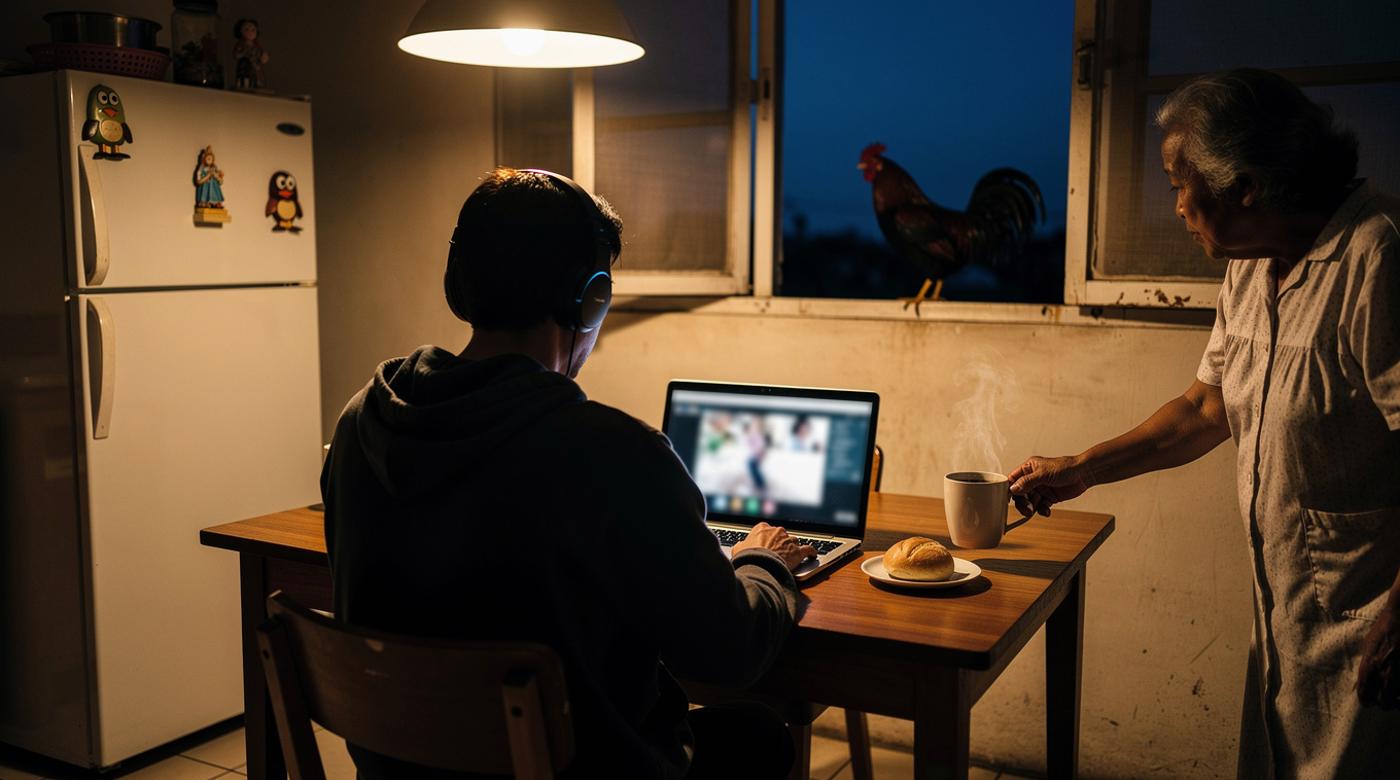
Anchored to Auckland, in full. The employee works 5:00 to 13:30 Manila time in the New Zealand winter and 4:00 to 12:30 in its summer. The New Zealand team gets every hour of overlap. The cost is the Philippine night differential: the Labor Code adds at least 10 percent to the hourly rate for work between 22:00 and 6:00, so the winter shift carries one hour a day at the premium and the summer shift carries two. On an eight-and-a-half-hour day that is roughly a 1 to 2.5 percent increase in the monthly wage, arithmetic on the rate rather than a quoted figure, and small next to the salary itself. The larger cost is the person. A 4:00 start is sustainable for people who choose it and corrosive for people who were told about it after signing, which is why the shift belongs in the offer, in writing, before the contract.
Anchored to a fixed 6:00 Manila start. The employee works 6:00 to 14:30 all year, touching none of the differential hours. In the New Zealand winter that is 10:00 to 18:30 Auckland time, covering the full New Zealand afternoon and the last hour of its day; in summer it is 11:00 to 19:30. Either way the New Zealand morning from 9:00 to 10:00 or 11:00 is uncovered. For work that peaks after lunch, which is most support, most operations and almost all work that depends on New Zealand clients replying, this is the shift that costs least and loses least.
Anchored to a standard Manila day. The employee works 8:00 to 17:00 and overlaps New Zealand from 12:00 to 17:30 in winter and 13:00 to 17:30 in summer: five and a half hours, then four and a half. The New Zealand morning is written down and handled in the Manila afternoon, and the New Zealand team ends its day with the answers waiting. Companies that treat the person as a colleague rather than a live extension of the front desk find this works, and it is the shift most Filipino candidates will accept without a premium.
The choice between the three should be made from the work, not from the map. A New Zealand accounting practice that needs someone on the phones when clients call at 9:30 needs the first shift or the second; a software company whose Filipino developer talks to the team once a day at stand-up needs the third. What does not work is leaving it vague. The gap moves an hour in September, and an employee who agreed to "New Zealand hours" in June is owed a conversation, not an announcement, when that happens.
Holidays complicate the calendar less than expected. New Zealand observes eleven national public holidays in 2026, plus each region's anniversary day; the Philippines observes twelve regular holidays and eight special non-working days. They rarely coincide, so a Filipino employee working New Zealand's calendar is working on Philippine holidays and off on New Zealand ones, and the pay rules for that belong in the contract: Philippine law sets the premium for work on a Philippine holiday regardless of which country's calendar the roster follows.
The pay, side by side in New Zealand dollars
Start with New Zealand's own floor. The adult minimum wage rose to 23.95 dollars an hour on 1 April 2026. A forty-hour week at that rate is about 4,150 dollars a month before tax, arithmetic on the rate, and from the same date the default KiwiSaver contribution rose to 3.5 percent from both employer and employee, on its way to 4 percent in 2028. Stats NZ put median hourly earnings at around 35 dollars in mid-2025. A New Zealand business hiring locally, even at the floor, is committing something over 4,300 dollars a month once the employer's KiwiSaver share is added.
Now the Philippine side, read from asking prices rather than guides. One staffing pipeline's 402 applications in the three months to September 2026 carried a median expected salary of 35,000 pesos a month for a full-time remote role, with the middle half asking between 30,000 and 50,000, and the number moving more with experience than with role: two-year candidates asked 30,000, ten-year candidates 50,000. At the early-September 2026 rate of about 36.9 pesos to the New Zealand dollar, the median ask is roughly 950 New Zealand dollars a month, and the top of the middle half about 1,350.
The ask is not the cost. A Philippine employer pays the thirteenth-month salary, the employer's share of the three statutory funds and, on the early shift, the night differential, which lifts a 35,000-peso salary to somewhere around 44,000 to 46,000 pesos all-in, or about 1,200 to 1,250 New Zealand dollars a month. A provider's fee sits on top of that if there is one. Even so, a fully loaded Filipino employee at the median ask costs roughly 30 percent of a New Zealand employee at the minimum wage, and the comparison at median New Zealand pay is starker still.
Two cautions belong beside that arithmetic. The first is that the median ask is the point where an offer is accepted quickly, not the point where it is fair; the candidates worth having are usually employed, price themselves above the median and give a month's notice, so a budget built at 45,000 to 50,000 pesos buys a different shortlist from one built at 35,000. The second is that the exchange rate is not stable. The New Zealand dollar's value against the peso moves several percent a year, and an employer that pays in pesos through a Philippine employer carries none of that day to day; an employer that pays a contractor directly in New Zealand dollars hands the risk to the worker, who notices.
The route: who employs the person
Everything above assumes an employee, and that assumption is where New Zealand instincts mislead. New Zealand employers are used to the 90-day trial period, available to all employers since December 2023, and to the idea that an offshore worker is probably a contractor. Neither travels.
A Filipino worker who spends full days on one company's work, on its roster and under its direction, is an employee under Philippine law whatever the contract calls them, and the reclassification risk lands on whoever benefited from the arrangement. The honest contractor route exists, but only for a person who genuinely runs a business with several clients. For a member of the team, there are two routes: the New Zealand company forms a Philippine entity and employs the person itself, which is a real business decision and rarely the right one for a first hire, or a Philippine employer takes the person onto its own payroll on the New Zealand company's behalf. That second route is what a staffing provider or employer of record does. Flex, for example, employs the person in the Philippines, carries the statutory contributions and the thirteenth month inside one monthly rate, and starts from a written hiring brief that fixes the role, the budget and, on this page's evidence, the shift.
Under that route the Philippine rules apply to the employment and the New Zealand ones do not. There is no 90-day trial; there is a six-month probation, and only if the standards for passing it were given to the employee in writing at the start. There is no KiwiSaver and no PAYE, because those attach to New Zealand employees on a New Zealand payroll; the Philippine funds sit in their place, paid by the Philippine employer. There is no at-will dismissal at any point, which is the single largest difference a New Zealand manager will meet, and a provider's job is to make sure it is never met by accident.
Conclusion
Philippines to New Zealand working hours come down to one number that changes twice a year: Manila is four hours behind Auckland from April to September and five hours behind from September to April. A fully mirrored New Zealand day starts before dawn in Manila and carries a small night premium; a 6:00 Manila start covers the New Zealand afternoon at no premium; a standard Manila day overlaps four to five hours and suits work that can be written down. At 2026 rates a fully loaded Filipino employee at the median asking salary costs about 1,200 to 1,250 New Zealand dollars a month against a local minimum-wage hire at over 4,300, and the person is an employee under Philippine law, not a contractor and not a 90-day trial. Choose the shift from the work, put it in the offer, and let a Philippine employer carry the employment. The four hours take care of themselves.