Overview
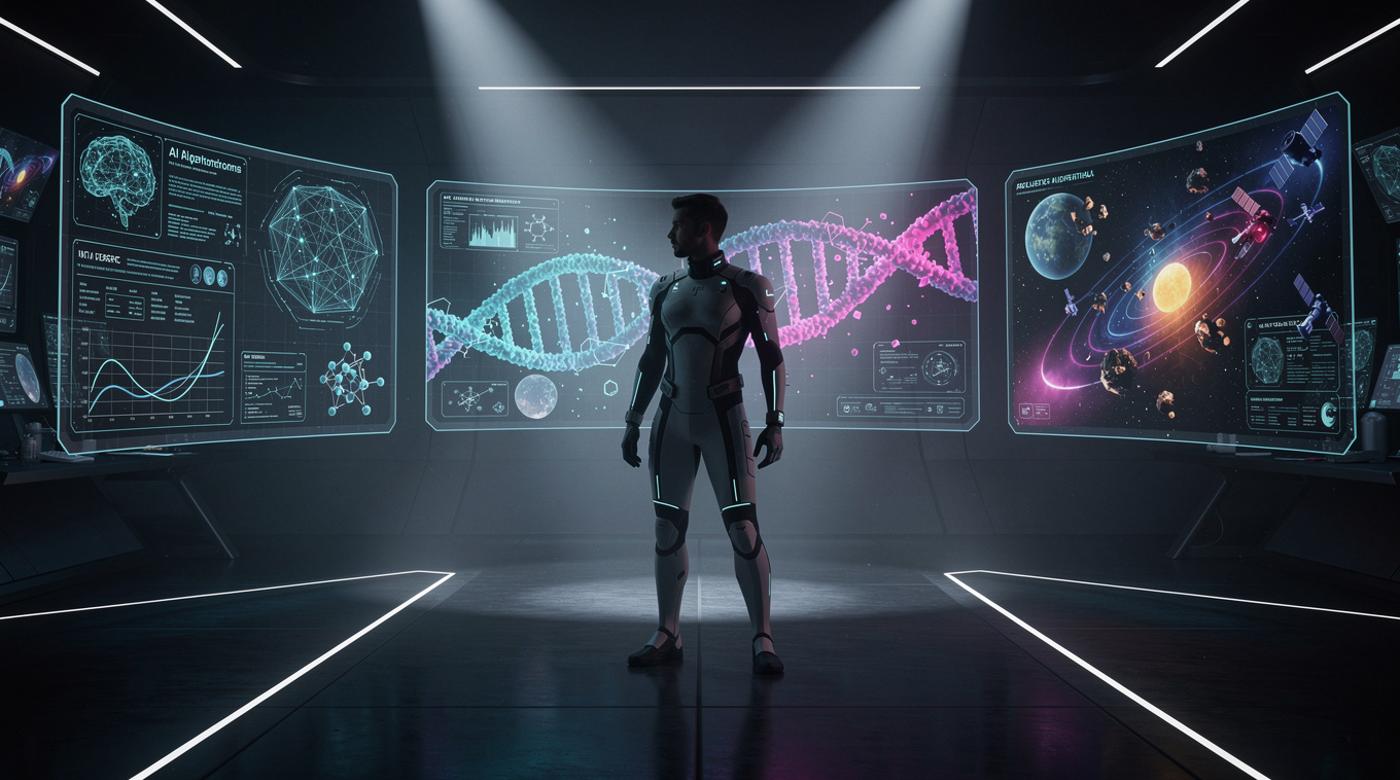
We stand at the precipice of a new industrial revolution, not driven by a single technology, but by the explosive convergence of artificial intelligence, biotechnology, space technology, and quantum computing. This fusion is creating market vacuums, spaces where demand is inevitable, but supply does not yet exist. The business ideas that will dominate 2026 are not mere extrapolations of current trends; they are the foundational services and infrastructures that will support the next decade of human and technological advancement. These concepts are "guaranteed to work" because they are engineered to solve critical, emerging problems created by this very convergence. They are not speculative bets; they are strategic inevitabilities. The following five ventures are blueprints for building the future, with first-mover advantages that could define the next generation of trillion-dollar companies.
Idea 1: AI-Personalized Reality Bubbles - Custom Digital Worlds on Demand
The future of entertainment, social connection, and even work lies not in a single metaverse, but in infinite, personalized digital realities. This business leverages the collision of two technologies: advanced neural interfaces (like next-gen EEG or non-invasive BCI headsets) and generative AI models capable of real-time world-building.
- The Core Product: A platform where users describe, think, or feel a desired environment, "a serene Japanese garden at dusk with the sound of distant wind chimes" or "a bustling alien marketplace from my favorite sci-fi novel", and an AI instantly generates a fully immersive, navigable 3D space. These are not pre-rendered games; they are dynamic, responsive worlds that adapt to the user's emotions and intentions.
- The Revenue Model: A tiered subscription service. Free tier offers basic, ad-supported public bubbles. Premium tiers unlock advanced personalization, persistent private worlds, complex multi-user environments for social gatherings or corporate retreats, and integration with digital asset marketplaces (e.g., selling unique sky textures or creature designs).
- Why It's Unstoppable: It solves the "blank canvas" problem of current VR/AR. The barrier to entry for creating compelling digital experiences is removed. The market is everyone from gamers and mindfulness seekers to remote teams needing innovative collaboration spaces. As hardware improves, the demand for compelling, personalized software will be insatiable.
"The next Netflix won't stream shows; it will stream realities tailored to your neural state."
Idea 2: Bio-Hacking Subscription Clinics - Genetic Optimization as a Service
Longevity and human enhancement are transitioning from Silicon Valley luxuries to mainstream aspirations. This venture democratizes access to cutting-edge biotech through a direct-to-consumer, membership-based clinical model.
- The Core Service: A network of sleek, tech-forward clinics (and affiliated at-home test kits) offering a monthly subscription. Members receive ongoing personalized biomarker analysis (epigenetic clocks, microbiome sequencing, metabolic panels), access to CRISPR-based therapeutic consultations for minor genetic optimizations (e.g., MTHFR gene variants), and curated regimens of next-gen nutraceuticals, peptides, and senolytics.
- The Revenue Model: High-margin monthly memberships ($300-$1000/month), with premium add-ons for advanced therapies (e.g., exosome treatments, hyperbaric oxygen sessions). Data anonymization and aggregation create a secondary revenue stream, selling insights to pharmaceutical and wellness research firms.
- Why It's Unstoppable: The global anti-aging market is projected to exceed $500 billion by 2026. Regulatory pathways for certain gene therapies and supplements are clarifying. This model provides a trusted, guided pathway for consumers overwhelmed by the unregulated bio-hacking landscape, turning life extension from a DIY gamble into a managed service.
Idea 3: Space Debris Recycling Ventures - Turning Orbital Junk into Profit
With over 9,000 tonnes of defunct satellites, rocket stages, and collision fragments in Low Earth Orbit (LEO), space is becoming a hazardous junkyard. This business transforms a critical sustainability problem into a pioneering resource industry.
- The Core Operation: Deploying a fleet of autonomous, robotic "salvage tugs" equipped with advanced grappling systems, propulsion, and on-board processing tools. These craft would:
- Capture and de-orbit high-risk debris for a fee from satellite operators and space agencies (the "waste management" model).
- For select, valuable debris (e.g., defunct satellites with high-grade aluminum, titanium, or even rare semiconductors), bring them to a processing station or directly harvest materials in-situ.
- Refurbish or melt down these materials to manufacture new satellite components or fuel in orbit, selling them to other space ventures at a fraction of Earth-launch cost.
- The Revenue Model: Government and commercial contracts for debris removal (a service mandated by future space traffic management laws). Sale of refined in-space materials (In-Situ Resource Utilization - ISRU). The value proposition is clear: it's cheaper to buy aluminum in orbit than to launch it from Earth.
- Why It's Unstoppable: Space sustainability is no longer optional. National space agencies and mega-constellations like Starlink will be legally and financially compelled to clean up. This venture positions itself as essential infrastructure, creating the first true circular economy beyond Earth. The first company to master this will hold a monopoly on the most valuable real estate in history: accessible space itself.
Idea 4: Emotion-Sensing Retail Environments - Stores That Adapt to Your Mood
The future of physical retail lies not in more products, but in transformative, adaptive experiences. This concept uses biometric AI to read customer emotional states and dynamically alter the store environment to maximize engagement and conversion.
- The Core Technology: Discreet, non-invasive sensors (advanced cameras with micro-expression analysis, thermal imaging for stress/arousal, anonymized gait analysis) integrated into a store's IoT network. This data feeds an AI that controls environmental variables in real-time:
- Lighting & Color: Shifting from energizing bright tones to calming pastels based on detected stress levels.
- Music & Scent: Curating playlists and diffusing aromatherapy scents (e.g., lavender for relaxation, citrus for energy) to subconsciously guide mood.
- Digital Displays & Product Placement: Changing promotional content on screens or even using robotic shelves to highlight products that subconsciously resonate with the customer's current emotional profile (e.g., comfort foods, aspirational apparel).
- The Revenue Model: B2B SaaS licensing of the "EmotionOS" platform to brick-and-mortar retailers, malls, and experience centers. Pricing based on store square footage and data analytics packages. The value is proven through dramatically increased dwell time, basket size, and customer loyalty.
- Why It's Unstoppable: It is the ultimate defense against e-commerce. Amazon can recommend a product, but it cannot change the air you breathe to make you more receptive to buying it. In an era where experience is the only differentiator for physical spaces, this technology offers a measurable, AI-driven edge that turns shopping from a transaction into a personalized journey.
Idea 5: Quantum-Secured Data Havens - Unhackable Global Storage Networks
As quantum computers advance, they will break the public-key encryption (like RSA) that secures nearly all of today's internet, financial systems, and state secrets. This venture builds the "quantum immune system" for global data.
- The Core Infrastructure: A decentralized global network of data centers that use Quantum Key Distribution (QKD), a method of transmitting encryption keys using photons, where any interception attempt alters the photons and is immediately detected. Combined with post-quantum cryptography algorithms and blockchain-like distributed ledger technology for access logging, it creates a storage solution that is provably secure against any computational attack, present or future.
- The Service: "Digital Fort Knox" storage for ultra-sensitive assets: sovereign wealth fund algorithms, pharmaceutical IP, foundational AI model weights, national security archives, and individual digital legacies. Data is sharded and distributed across multiple international jurisdictions for redundancy and legal protection.
- The Revenue Model: High-value, long-term contracts with governments, Fortune 500 companies, and research institutions. A tiered service for enterprises and wealthy individuals. This isn't competing with Dropbox; it's serving a market where the cost of a breach is existential, and the premium for guaranteed security is limitless.
- Why It's Unstoppable: The quantum threat is not an "if" but a "when." Governments are already mandating migration to post-quantum security. This business doesn't wait for the crisis; it builds the lifeboat now. In a world of escalating cyber warfare and data fragility, offering 100% security is the most valuable commodity of all.
Conclusion
These five ideas are more than businesses; they are responses to fundamental shifts in technology and human need. To pick your 2026 venture, follow this actionable framework:
- Validate the Core Convergence: Map your idea against at least two converging tech trends (e.g., AI + Biotech for the clinics). The intersection is where defensible moats are built.
- Identify the Inevitable Payer: Who must solve this problem? (Governments for space debris, Fortune 500 for quantum security, consumers for personalized reality). Build your model around their unavoidable need.
- Start with the MVP, Not the Moonshot: Begin with a minimal, revenue-generating version. For Emotion-Sensing Retail, start with a software kit for existing smart lighting/music systems. For Bio-Hacking, launch with at-home biomarker testing and telehealth consultations before building clinics.
- Assemble a Hybrid Team: These ventures require polymaths. Pair a biochemist with a SaaS marketer. An aerospace engineer with a blockchain developer. This interdisciplinary thinking is your primary competitive advantage.
The future isn't something that happens to you. It's a landscape to be constructed. The blueprints are above. The 2026 revolution begins with the decision to build not for the world as it is, but for the world these technologies are guaranteed to create.