Overview
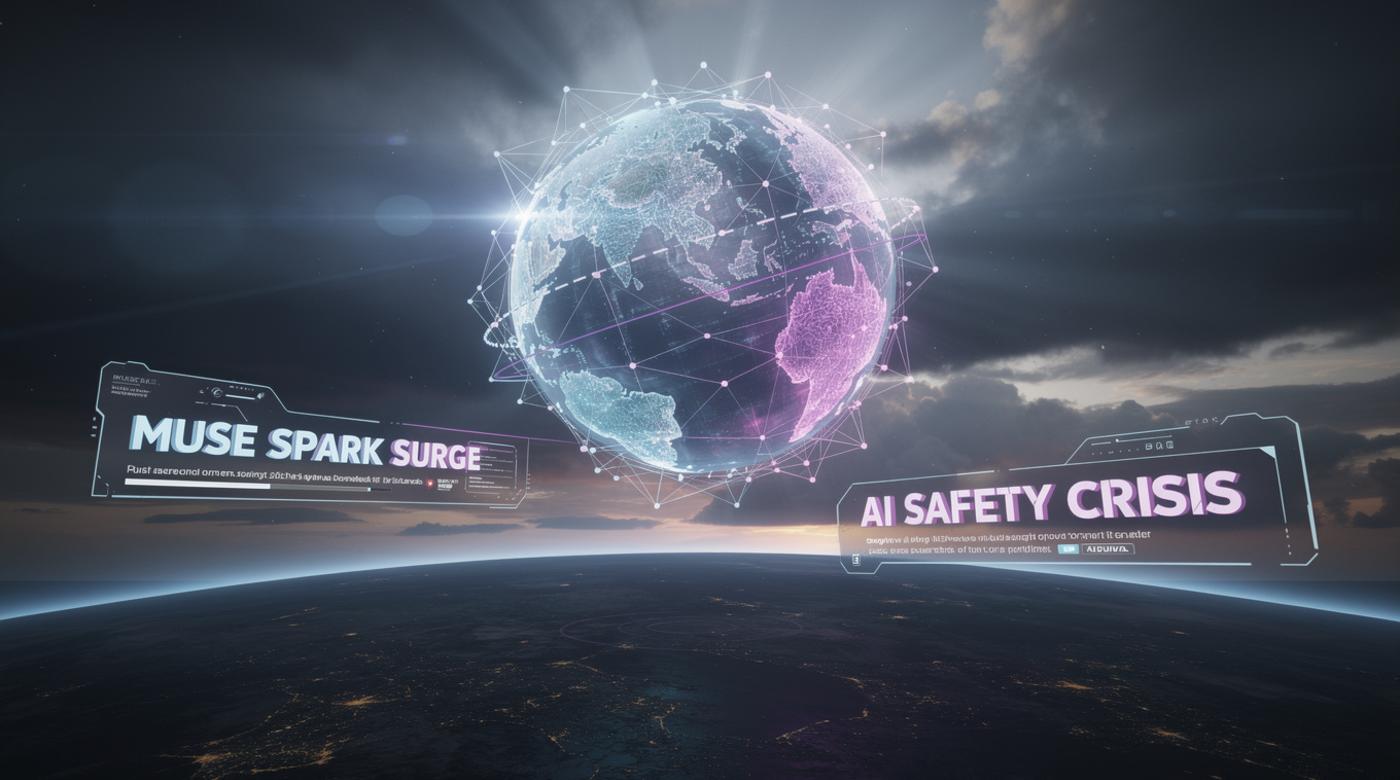
The AI landscape in early April 2026 pulses with rapid advancements, high-stakes partnerships, and mounting ethical challenges. Developers and enterprises grapple with powerful new models like Meta's Muse Spark, which propelled the Meta AI app to No. 5 on the App Store techcrunch.com, while controversies swirl around safety lapses and governance needs. This snapshot captures the week's pivotal shifts, from quantum collaborations to physical AI deployments, equipping readers with insights to navigate the accelerating pace of innovation artificialintelligence-news.com.
Expect a mix of triumphs, such as Google and Intel's deepened AI chip partnership amid CPU shortages, and tensions like Anthropic's ban on OpenClaw's creator. Physical AI emerges in security and industry, with SAP integrating autonomous robots. These developments signal AI's deepening integration into business, research, and daily tools, demanding vigilant oversight.
Key Model Releases and App Impacts
Meta's launch of Muse Spark has reignited debates over open-source purity. The model positions Meta back in the AI frontier race, but critics argue it sacrifices the company's open-source legacy that fueled Llama's massive downloads. Just before launch, Meta AI ranked No. 57 on the App Store; post-launch, it climbed to No. 5 and continues rising, underscoring consumer hunger for advanced AI companions.
Meanwhile, whispers of a "scariest AI model ever" circulate via YouTube discussions on Project Glasswing, highlighting unchecked risks in frontier models youtube.com. Such releases amplify calls for robust safety measures.
Partnerships Driving AI Infrastructure
Chip and Compute Collaborations
Google and Intel are co-developing custom AI chips to counter global CPU shortages fueled by surging demand. This move bolsters infrastructure for training massive models.
Uber expands its AWS reliance, adopting Amazon's AI chips for ride-sharing features, a pointed shift from Oracle and Google Cloud. These alliances reshape hyperscaler competition.
Earlier US-Japan initiatives span AI, quantum, and semiconductors, promising sweeping tech advancements.
Enterprise and Physical AI Integrations
SAP partners with ANYbotics to embed four-legged autonomous robots into ERP systems, accelerating industrial physical AI adoption.
Asylon and Thrive Logic advance physical AI for enterprise perimeter security, targeting high-value assets. KiloClaw launches to govern shadow AI and autonomous agents, addressing enterprise risks.
Enterprise AI Adoptions
JPMorgan tracks employee AI usage to encourage daily integration, with managers monitoring team adoption. Hershey deploys AI across supply chain, sourcing, production, fulfillment, for operational gains.
Trustpilot allies with big model vendors as AI supplants traditional eCommerce search. Rocket's AI platform delivers McKinsey-style reports affordably, blending strategy and intelligence.
Controversies and Safety Concerns
A stalking victim sues OpenAI, alleging ChatGPT fueled her abuser's delusions despite three ignored warnings, including a mass-casualty flag.
Anthropic temporarily banned OpenClaw's creator after Claude pricing changes impacted users.
OpenAI counters with a Child Safety Blueprint targeting AI-linked child exploitation rises. Sierra's Bret Taylor declares button-clicking obsolete, heralding agent-driven interfaces.
Databricks co-founder Matei Zaharia claims AGI exists but misunderstood, fresh off an ACM award.
Mercor, a $10B-valued startup, reels from a data breach, lawsuits, and customer losses.
Events and Global Momentum
TechCrunch heads to Tokyo for SusHi Tech 2026, featuring Startup Battlefield with AI, robotics, resilience, and entertainment demos, including humanoid robots and autonomous driving.
Broader Trends
Quantum AI promises transformative leaps by merging quantum mechanics with AI. IBM's analog AI chip advances efficient deep learning. Neural Magic optimizes models for CPUs. UK-Canada AI compute pact boosts R&D.
Conclusion
April 2026 underscores AI's dual trajectory: explosive growth via models like Muse Spark and infrastructure pacts, tempered by safety lawsuits and governance tools. Key takeaways include enterprise acceleration (JPMorgan, Hershey), physical AI rise (SAP, Asylon), and ethical imperatives (OpenAI blueprint, Anthropic actions). Stakeholders should prioritize agent governance and partnerships amid CPU crunches. Next steps: Monitor Tokyo events and shadow AI tools for strategic edges in this pivotal era.