Overview
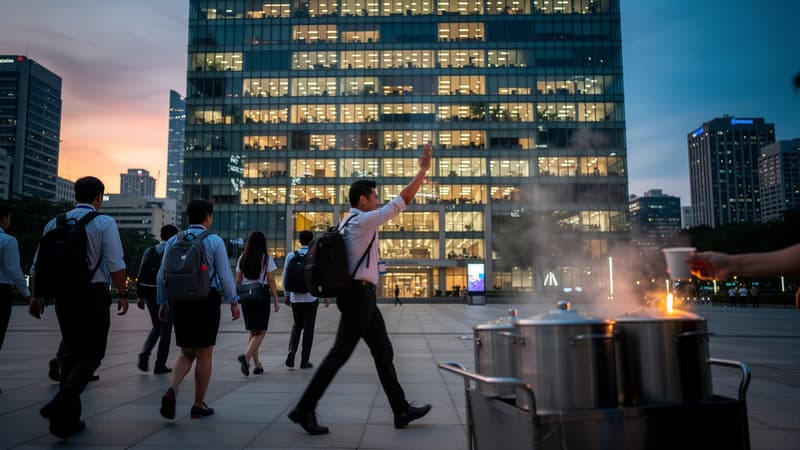
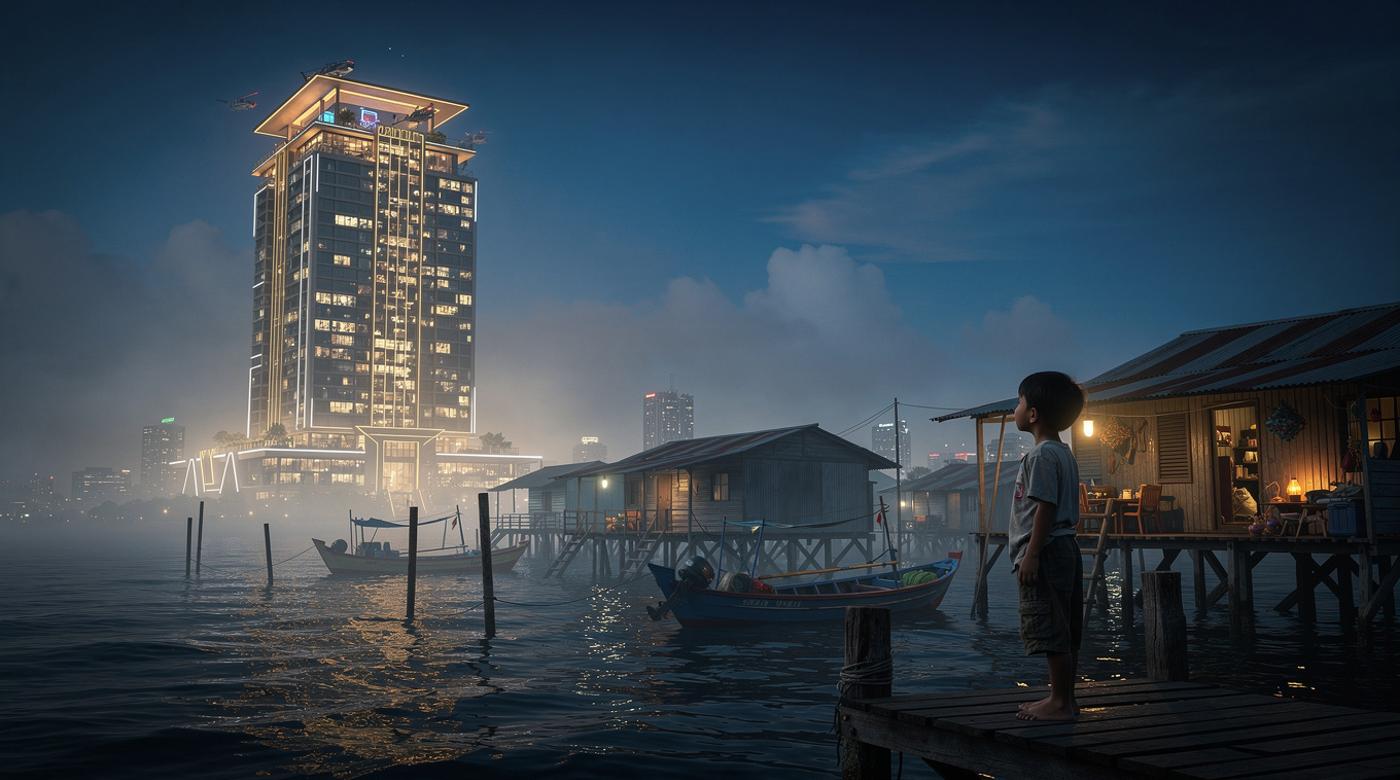
In the Philippines, economic growth tells a story of success, while daily life tells a story of struggle. The country is projected to grow at 5.2-5.6% in 2025, yet 55% of Filipino families report feeling poor. This stark contrast reveals a fundamental truth: the socio-economic race is rigged from the start. Birth into a political dynasty versus a fishing village sets trajectories that are worlds apart. The pervasive narrative of 'hustle culture', that hard work alone can overcome any obstacle, is a myth in a system where inequality is not an accidental byproduct but a deliberate, systemic feature. This article explores how centuries of colonial history, entrenched land monopolies, and self-perpetuating political dynasties have designed a society where wealth and power are concentrated in the hands of a few, leaving the majority to navigate a landscape of limited opportunity and crushing precarity.
The Feudal Echo: How Colonial Hierarchies Calcified Class Structure
The roots of Philippine inequality stretch back over 300 years to Spanish colonial rule. The Spanish strategy was not to dismantle existing social structures but to co-opt them. Tribal chiefs (datus) were integrated into a new ruling class called the principalia, granted land, tax collection rights, and local authority in exchange for loyalty and conversion to Catholicism. This created a landed elite whose power was legitimized by colonial authority. Over time, this elite further consolidated its position through intermarriage with wealthy Chinese merchants, forming a mestizo class that controlled commerce and agriculture. The hook here is profound: many of today's business and political elites are direct descendants of these pre-colonial tribal chiefs, their power merely rebranded through centuries. Families like the Zobel de Ayalas (of Ayala Corporation) trace their lineage to this principalia-mestizo fusion. This historical continuity means that control over the means of production, land, capital, and political influence, has remained within the same lineages for generations. Inequality, therefore, is not a recent development but a centuries-old design, intentionally crafted to maintain a hierarchy where a small elite governs economic and social life.
Land Monopoly: The Century-Long Stagnation of Ownership
If colonial history set the stage, land ownership is the primary theater where inequality plays out. The land Gini coefficient, a measure of inequality where 0 represents perfect equality and 1 represents perfect inequality, has barely budged in over a century. It stood at approximately 0.7 in 1918 and remains around 0.6 today, indicating extreme concentration. Specifically, the top 3% of landowners control about 25% of the country's agricultural land. This isn't just about farms; it's about urban development, natural resources, and economic sovereignty. Family conglomerates like Ayala Land and San Miguel Corporation have created what analysts call an 'island economy', self-contained mini-economies where they control everything from housing and utilities to retail and entertainment within their developments. The human cost is visceral. Consider the New Manila International Airport project in Bulacan, which is displacing thousands of fishing and farming families with minimal compensation, erasing livelihoods to make way for infrastructure that primarily serves the elite and foreign investors. This land concentration perpetuates a cycle of poverty: without land, the poor lack collateral for loans, security for housing, and a means to build generational wealth. It's a structural stagnation that ensures the starting line for millions remains firmly behind that of the few.
Education's Broken Ladder: When Learning Poverty Meets Falling Returns
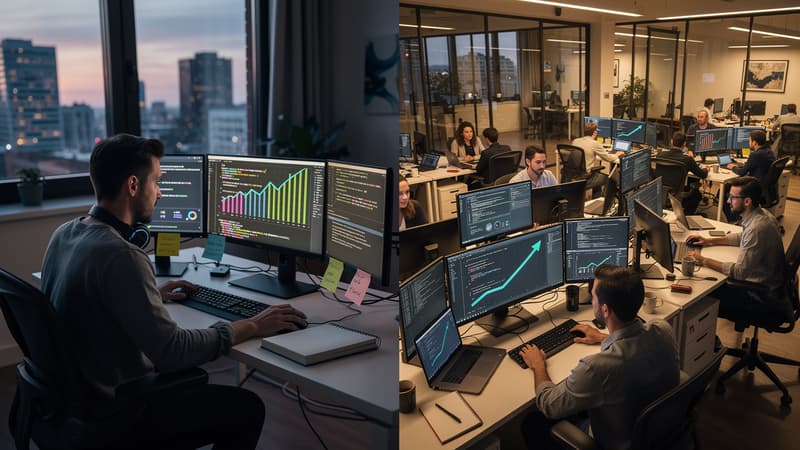
Education is often touted as the great equalizer, but in the Philippines, the ladder is broken. The World Bank reports a 'learning poverty' rate of 90%, meaning 9 out of 10 children at age 10 cannot read and understand a simple story. This foundational failure is compounded by stark access disparities: 47% of youth from the richest decile enter higher education, compared to just 17% from the poorest. Even for those who beat the odds, the economic return is diminishing. The wage premium for a college degree has plummeted from 140% in 2010 to 94% in 2022, as an oversupply of graduates meets an underperforming economy that creates few high-quality jobs. The COVID-19 pandemic exacerbated this with a 'K-shaped' recovery: the wealthy rebounded quickly, often leveraging digital tools and capital, while the poor faced deeper setbacks. This disparity is personal. Stories like that of Elio, a college graduate working multiple 'extreme survivalist' jobs, from online tutoring to food delivery, just to afford rent in Manila, illustrate the crushing pressure. For the wealthy, education offers an 'option to fail', a safety net of family connections and capital. For the poor, a single setback, a family illness, a job loss, can shatter dreams built on years of sacrifice, turning education from a ladder into a debt trap.
Political Dynasties: Designing Inequality Through Legislative Power
Philippine inequality is meticulously curated by political power. An estimated 80% of seats in the House of Representatives are held by members of political dynasties, families that maintain power across generations and branches of government. These clans are not merely public servants; they are often business empires in political garb. They use legislative power to pass policies that favor their family enterprises, from tax breaks and contracts to land conversion and regulatory capture. The Partylist system, designed to give marginalized sectors a voice in Congress, has been largely subverted by these dynasties, with parties representing security guards or tricycle drivers often led by relatives of major political families. This creates a feedback loop of impunity: wealth buys political power, and political power protects and amplifies wealth. Reform becomes nearly impossible because those who would need to change the laws are the primary beneficiaries of the status quo. It's a system where, as one analyst bluntly put it, 'the game is rigged, and the referees are on the payroll.' This deliberate design ensures that economic policies, from trade agreements to budget allocations, consistently prioritize the interests of the elite over the needs of the majority, making systemic inequality a feature, not a bug.
Digital Visibility: The End of Patience and Rise of Youth Protest
The traditional image of the 'patient Filipino' is dying, killed by digital visibility. On social media platforms, the opulent lifestyles of '#Nepobabies', children of elites flaunting luxury cars, overseas vacations, and designer goods, are displayed alongside viral stories of families struggling to afford even one meal a day. This constant, jarring contrast has shattered the illusion of shared struggle. Young Filipinos, in particular, are not just comparing themselves to their wealthy compatriots but to their neighbors in Thailand and Vietnam, where rapid development has delivered more tangible improvements in living standards. This fuels a growing sense of injustice and a rise in youth-led protests against corruption and what many call the 'plundering' of the nation's resources. As Gabriel Pineda, a student activist, framed it: 'We are not a poor country; we are a robbed country.' This digital awareness is transforming passive acceptance into active irritation. It's no longer just about economic hardship; it's about the visibility of inequality, the transparency of privilege, and the growing demand for accountability. This shift in consciousness represents a potent force for change, as a generation that can see the rigged system clearly is less willing to accept its rules quietly.
Conclusion
The Philippines stands at a precipice. Without radical reforms in education, healthcare, land distribution, and anti-corruption, the country risks permanent entrapment in the 'middle-income trap', where growth stalls, and inequality solidifies. The dreams of individuals like Gabriel Pineda, who simply want a fair shot, or Arlaica, a farmer displaced by an airport project who dreams of land security, are treated as luxuries by a system designed for exclusion. The question is no longer whether inequality exists, but whether centuries of systemic exclusion can be reformed from within or require a fundamental overhaul. Moving the starting line for future generations demands more than token policies; it requires dismantling the interlocking structures of land monopoly, dynastic power, and educational disparity. The alternative is a future where economic growth remains a statistic that benefits the few, while the feeling of poverty remains the reality for the many. The choice is between continuing a designed inequality or building a new design, one where opportunity is not inherited but earned, and where the nation's wealth serves all its people, not just its oldest families.