Overview
On January 13, 2026, [Microsoft](/articles/why-should-you-choose-litespeed-over-apache: Why Should you Choose LiteSpeed Over Apache?) released [Windows 11](/articles/is-it-still-worth-using-wordpress-in-2025: Is it Still Worth Using Wordpress in 2025) update KB5074109, a cumulative security patch that quickly became infamous for its widespread system-breaking failures. The update, intended to address 114 vulnerabilities including three zero-days, instead rendered basic system functions unusable for many users, from the Start menu to the Notepad application. ThePrimeagen, a prominent tech commentator, captured the ensuing chaos in a viral video, framing the debacle not just as a technical failure but as "prime marketing for [Linux](/articles/overkill-deno-2-and-cloudflare-workers-and-pages: Overkill Deno 2 and Cloudflare Workers and Pages)." The incident highlighted a critical tension in Microsoft's strategy: the aggressive push for [AI integration](/articles/the-future-of-web-development-with-ai: The future of Web Development with AI) and new features versus the foundational requirement of system stability. As enterprise IT departments scrambled and consumer frustration boiled over, the episode became a case study in how a single bad update can undermine years of brand trust and accelerate competitive shifts in the operating system landscape.
Video Intro Shock
ThePrimeagen's video opens with dramatic, deadpan delivery: "Microsoft has released a bad update." He details the absurdly basic failures: pressing the Windows key yields nothing, the Start menu simply does not open. The situation escalates to a "Black Screen of Death" that he describes as more disorienting than a traditional Blue Screen, as it offers no error code, just void. Even Notepad, an application he mocks as being "simpler than Nano," becomes inaccessible. This trifecta of failures, core navigation, display, and basic text editing, creates a perfect storm of user helplessness, transforming a routine security update into a system-wide paralysis event.
Update Details
KB5074109 was a mandatory cumulative update for Windows 11 versions 24H2 and 25H2. Its stated purpose was to patch 114 security vulnerabilities, three of which were actively exploited zero-days. It also included non-security improvements previously tested in the Insider Preview channel, such as optimizations for Neural Processing Unit (NPU) power management on compatible hardware. The rollout employed Microsoft's phased deployment strategy, but installation snags appeared almost immediately. Users reported the update hanging at various boot stages, 0%, 35%, and others, before failing and handing off to temporary installer processes that often compounded the problem rather than resolving it.
Core Failures
The technical failures were profound and multifaceted. Applications refused to launch outright, with the Start menu becoming completely unresponsive, a critical blow to user workflow. ThePrimeagen ironically notes that legacy software like old versions of Microsoft Word could still open in 0.75 seconds on ancient Pentium hardware, while the modern OS shell was frozen. A severe "Black Screen of Death" issue particularly plagued systems with NVIDIA GPUs, accompanied by UNMOUNTABLE_BOOT_VOLUME errors that suggested deeper file system corruption. Crucially, these issues persisted through two subsequent out-of-band patches released by Microsoft by January 29, indicating the problems were not superficial glitches but embedded systemic flaws.
Microsoft Fixes
Microsoft's response was a mix of triage and damage control. The official guidance was to uninstall the update via Settings > Update History or, for more bricked systems, through the Windows Recovery Environment (WinRE). The company acknowledged that the update could fail on enterprise PCs that had previous, incomplete update attempts lingering in the system. Server-side, Microsoft managed to resolve some ancillary issues like Remote Desktop connection failures and Outlook hangs related to POP3/PST files, but for the core Start menu and black screen problems, the primary advice remained removal. This came with a stark warning: uninstalling the update would re-expose systems to the 114 security vulnerabilities, forcing users and admins to choose between functionality and protection.
Satya Nadella Jab
ThePrimeagen directs pointed criticism at Microsoft CEO Satya Nadella, framing the debacle as a consequence of strategic misalignment. He ribs Nadella for the company's relentless "Copilot everywhere" AI push, suggesting it has come at the expense of core OS stability. "They're putting AI in Notepad before they can make Notepad open," he quips, calling the prioritization "punching down" on users who just need their computers to work. He contrasts Microsoft's AI efforts with tools like Anthropic's Claude, which he cites as a superior AI for practical tasks like Excel analysis, implying Microsoft's AI ambitions are both distracting and not yet best-in-class.
Root Cause Critique
The video argues the root cause is not AI technology itself, but a "massive leadership failure" in product management and quality assurance. The critique is that Microsoft is chasing market trends, like injecting AI into every application, instead of ensuring rock-solid, reliable updates. ThePrimeagen proposes a hypothetical "deal": Microsoft should mandate five consecutive months of bug-free, stable updates before introducing any new AI features. He sarcastically praises Microsoft's sales team as the "real heroes," noting their ability to secure enterprise contracts and Azure deals despite the public-facing software chaos, highlighting a disconnect between commercial success and end-user experience.
Linux Pitch and Close
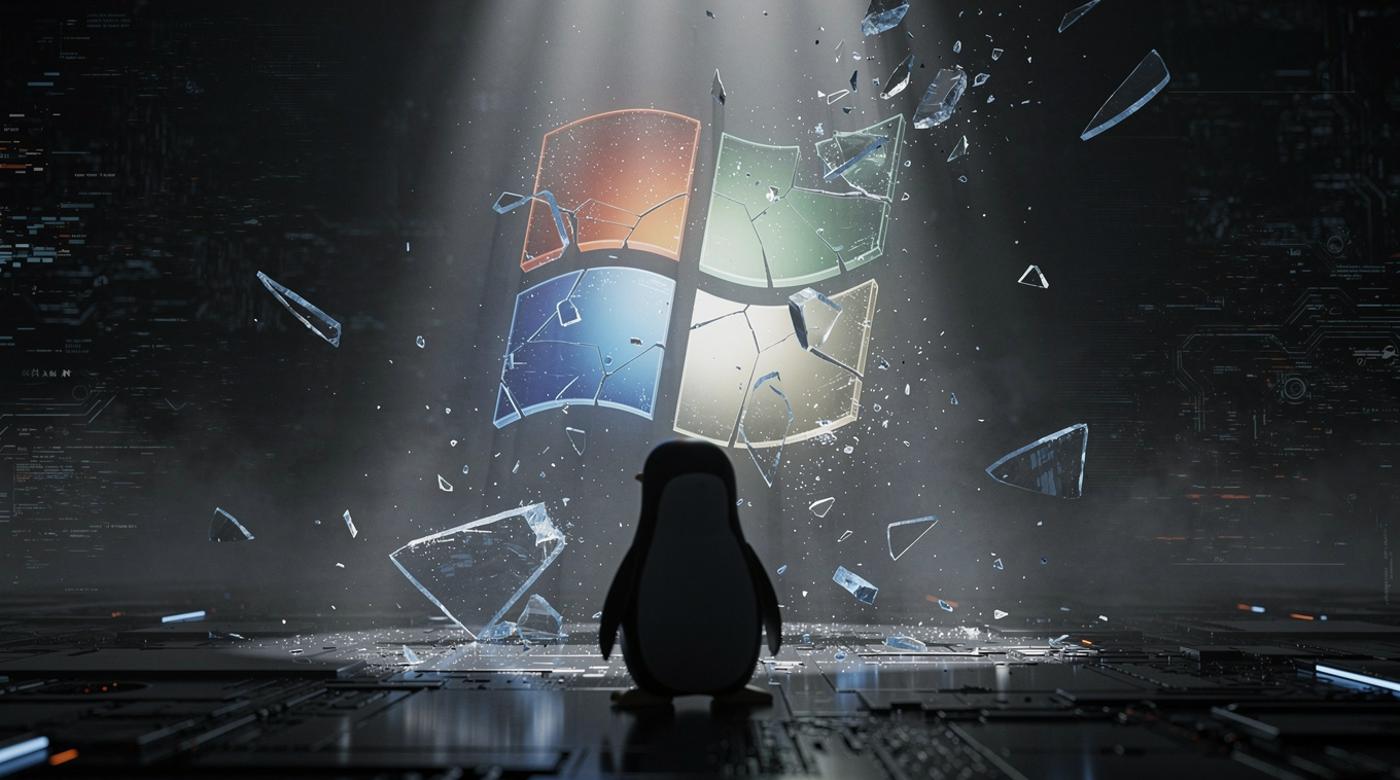
The video culminates in a bold proclamation: 2026 is the "year of the Linux desktop," ironically crediting Microsoft's own missteps as the catalyst. ThePrimeagen notes that Microsoft has, perhaps unintentionally, become open-source's greatest evangelist by demonstrating the risks of opaque, forced updates. He closes not with triumphant glee, but with a note of weary resignation, "tired of mocking" a company that seems to repeat the same mistakes. The final gag is an AI-generated video clip of a smiling Satya Nadella, a surreal coda underscoring the disconnect between corporate messaging and user reality.
Current Status (February 2026)
As of February 2026, Microsoft has not released a major follow-up fix that fully resolves the lingering issues from KB5074109. The official documentation for Windows 11 25H2 still lists several known issues related to the update. The prevailing guidance remains the same: if systems exhibit the black screen or Start menu failures, uninstall the update. This effectively means a segment of the Windows user base is operating without critical January 2026 security patches, prioritizing immediate stability over security, an untenable long-term position. The consumer and professional backlash has been tangible, fueling increased experimentation with and migration to Linux distributions, precisely as ThePrimeagen's video predicted. The episode stands as a stark reminder that in the OS wars, trust is the most fragile currency.
Conclusion
The Windows 11 KB5074109 fiasco of January 2026 was more than a technical blunder; it was a significant strategic and reputational event. It exposed the vulnerabilities of an update model that prioritizes feature velocity and AI integration over fundamental reliability. While Microsoft's enterprise engine and cloud services may continue to thrive, the incident has eroded consumer confidence and provided a powerful narrative for alternative platforms. ThePrimeagen's viral critique successfully framed the chaos as a self-inflicted wound that benefits competitors, particularly Linux. Whether 2026 truly becomes the "year of the Linux desktop" remains to be seen, but Microsoft has undoubtedly handed its rivals a potent marketing gift, a case study in what happens when an operating system forgets that its primary job is to operate.