Overview
Landing your first web development job or client in the Philippines is a strategic journey that blends foundational skill mastery with savvy market positioning. The local tech ecosystem is vibrant, with a high demand for developers who can deliver clean, functional code and communicate effectively. This guide provides a roadmap from zero to hireable, focusing on the essential skills to build, the pitfalls to avoid, and the emerging technologies that will define the market through 2026. Whether you're aiming for a corporate role in Manila or a freelance gig on international platforms, the principles of a strong portfolio, in-demand stack proficiency, and clear communication are non-negotiable. Let's dive into the actionable steps that will transform your coding curiosity into a sustainable career.
Core Skills to Master First
Your journey must begin with the bedrock of web development: HTML, CSS, and JavaScript. These are not just checkboxes; they are the language of the web, and mastery here separates hobbyists from professionals. In the Philippines, employers and clients expect you to build responsive, accessible interfaces from scratch. Start by creating static websites, a personal portfolio, a landing page for a local business, and ensure they work flawlessly across devices. For structured learning, consider bootcamps like ActiveLearning or Uplift Code Camp, which offer hands-on projects that simulate real-world tasks. These programs often culminate in a portfolio piece, giving you tangible evidence of your skills. The goal is to move from understanding syntax to applying it in projects that solve problems, as this is what hiring managers in PH tech hubs like BGC and Makati look for.
Build a Killer Portfolio
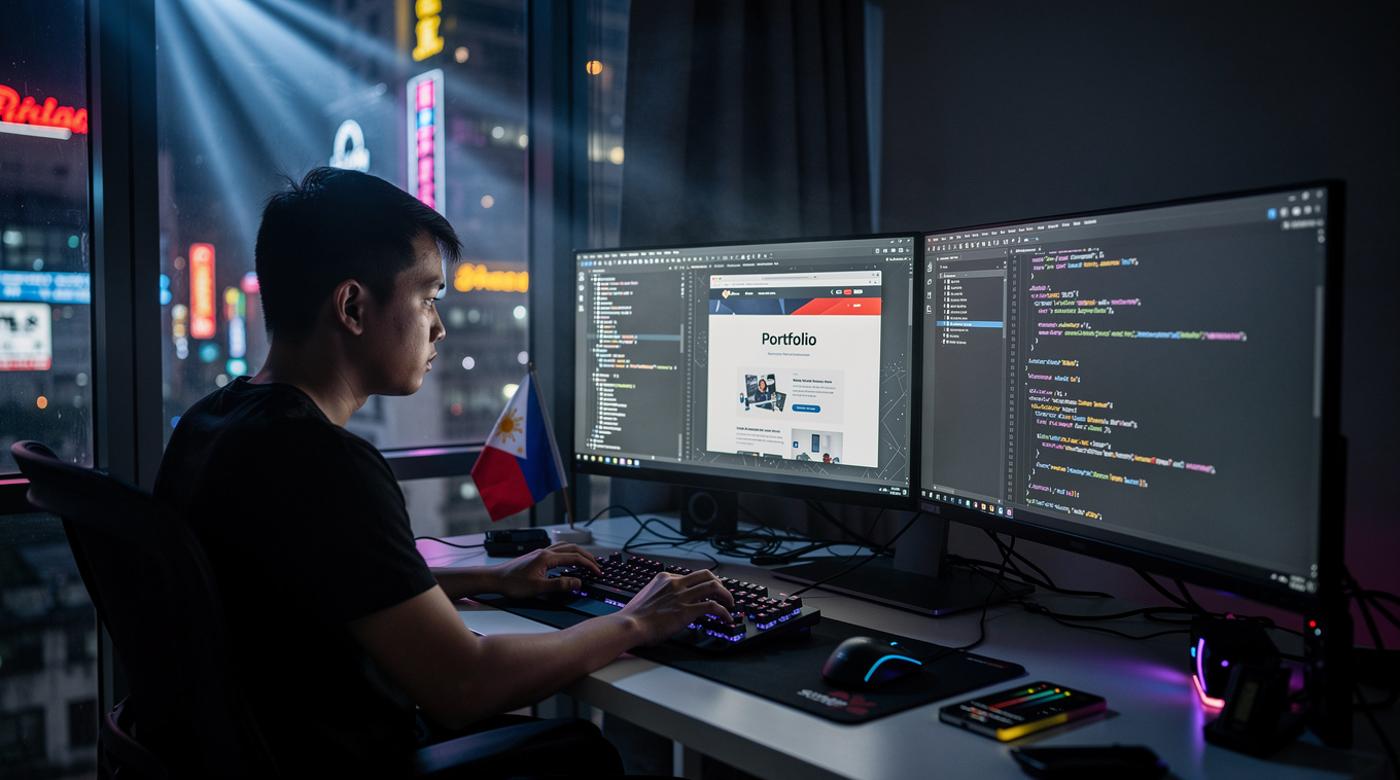
Your portfolio is your most powerful asset. It's not enough to have code on GitHub; you need live, deployed projects that anyone can interact with. Deploy 2-3 applications on platforms like Vercel or Netlify, these are free and widely respected in the industry. Each project should showcase a different skill: perhaps a to-do app with vanilla JavaScript, a responsive blog with CSS Grid, and a dynamic site with a backend API. Crucially, vet your projects as an employer would: open the browser's developer console and ensure there are no errors. Clean code, proper indentation, and meaningful commit messages on GitHub signal professionalism. For Filipino freelancers, this often trumps a traditional resume; clients on platforms like Upwork or OnlineJobs.ph will click your links first. Include a brief case study for each project, explaining the problem, your solution, and the technologies used. This demonstrates not just coding ability, but critical thinking.
Master In-Demand Stacks for PH Jobs
The Philippine market has distinct preferences. On the backend, PHP with Laravel remains dominant due to its use in legacy systems and many local startups, while Node.js is growing for modern applications. On the frontend, React is highly sought after, with Vue.js also popular in some circles. Full-stack roles often involve the MERN stack (MongoDB, Express.js, React, Node.js) or the LAMP stack (Linux, Apache, MySQL, PHP). WordPress development is also a lucrative niche, especially for freelancers serving small businesses. Rates for Filipino developers range from $10 to $55 per hour, depending on experience and specialization. While mainstream stacks offer more job opportunities, niche areas like AI/ML command premium rates but require deeper expertise. Focus on one backend and one frontend technology initially, building projects that integrate both, such as a CRUD application with user authentication.
Nail Communication & English Proficiency
The Philippines ranks high in English proficiency, but standing out requires more than fluency. You must be able to explain technical concepts clearly to non-technical stakeholders, a skill that often seals deals. Prepare for interviews by practicing coding challenges on platforms like LeetCode or HackerRank, and articulate your thought process aloud. Platforms like Toptal and Arc.dev vet developers rigorously, and stories from their processes highlight that communication is as critical as coding ability. In client settings, this means writing clear project proposals, providing regular updates, and documenting your code. For Filipino developers targeting international clients, this is a competitive advantage; many clients in the US or Australia value developers who can bridge the gap between business needs and technical execution.
Prep for First Client or Job Hunt
Target platforms strategically. For job seekers, local sites like JobStreet and Kalibrr list many tech roles, while international platforms like LinkedIn and Indeed offer remote opportunities. For freelancers, Upwork, OnlineJobs.ph, and Fiverr are starting points. Build a GitHub profile with functional demos and contribute to open-source projects to showcase collaboration skills. Learn Bootstrap or Tailwind CSS for rapid prototyping of responsive sites, a common requirement in PH job postings. A realistic timeline: 0-3 months for foundational skills and a basic portfolio, 3-6 months for stack specialization and advanced projects, 6-12 months for job applications and interview prep. This roadmap can accelerate to full-stack readiness with dedicated effort, especially if you leverage bootcamps or mentorship.
Top Pitfalls to Avoid
Avoid presenting an unvetted portfolio. Clients and employers will inspect your live sites for console errors, slow load times, or broken features, these are immediate red flags. Do not overpromise on niche skills like blockchain or machine learning unless you have substantial expertise; the PH talent pool in these areas is still growing, and misrepresentation can damage your reputation. Another common trap is neglecting soft skills; technical ability alone won't secure long-term clients. Learn from hiring guides that emphasize the importance of reliability, meeting deadlines, and proactive communication. Also, avoid spreading yourself too thin by learning every new framework; depth in a few technologies is more valuable than superficial knowledge of many.
2026 Language & Tech Priorities
Looking ahead to 2026, prioritize languages and frameworks with strong growth trajectories. JavaScript and TypeScript will remain essential, with TypeScript gaining adoption for its type safety in large codebases. Python continues to rise due to its versatility in web development, data science, and AI, while Go is emerging for high-performance backend services. On the frontend, React and Vue will dominate, with a focus on component-based architecture and state management. Backend trends include serverless functions and Node.js or PHP for APIs. Security is paramount; familiarize yourself with OWASP Top 10 vulnerabilities and implement best practices in authentication and data protection. Progressive Web Apps (PWAs) are becoming standard for mobile-first experiences, offering offline capabilities and app-like performance. Investing in these areas future-proofs your skills against evolving market demands.
Leverage AI as Core Strength
Embrace AI as an accelerator, not a crutch. Use tools like GitHub Copilot or ChatGPT for code generation, debugging, and learning new concepts. For instance, you can prompt AI to explain complex JavaScript closures or generate boilerplate for a React component. Beyond assistance, integrate basic machine learning into your projects, such as a recommendation engine for an e-commerce site, to stand out. Roadmap AI integration from day one: start with AI-powered code completion, progress to using AI for project ideation, and eventually build simple ML models with libraries like TensorFlow.js. This approach can compress the learning curve, enabling developers with no prior experience to reach full-stack competency in months rather than years. In the PH context, where tech adoption is rapid, AI proficiency is becoming a differentiator in job markets.
Conclusion
Success as a web developer in the Philippines hinges on a balanced approach: solid fundamentals, a polished portfolio, and strategic skill alignment with market needs. By mastering core technologies, building demonstrable projects, and honing communication, you position yourself for opportunities in both local and global arenas. Avoid common pitfalls by vetting your work rigorously and focusing on in-demand stacks. As you look toward 2026, prioritize emerging technologies like TypeScript, PWAs, and AI integration to stay competitive. Remember, this field rewards continuous learning and adaptability. Start today, build consistently, and leverage the vibrant PH tech community for support. Your first job or client is not a distant dream but a achievable milestone on this structured path.