Overview
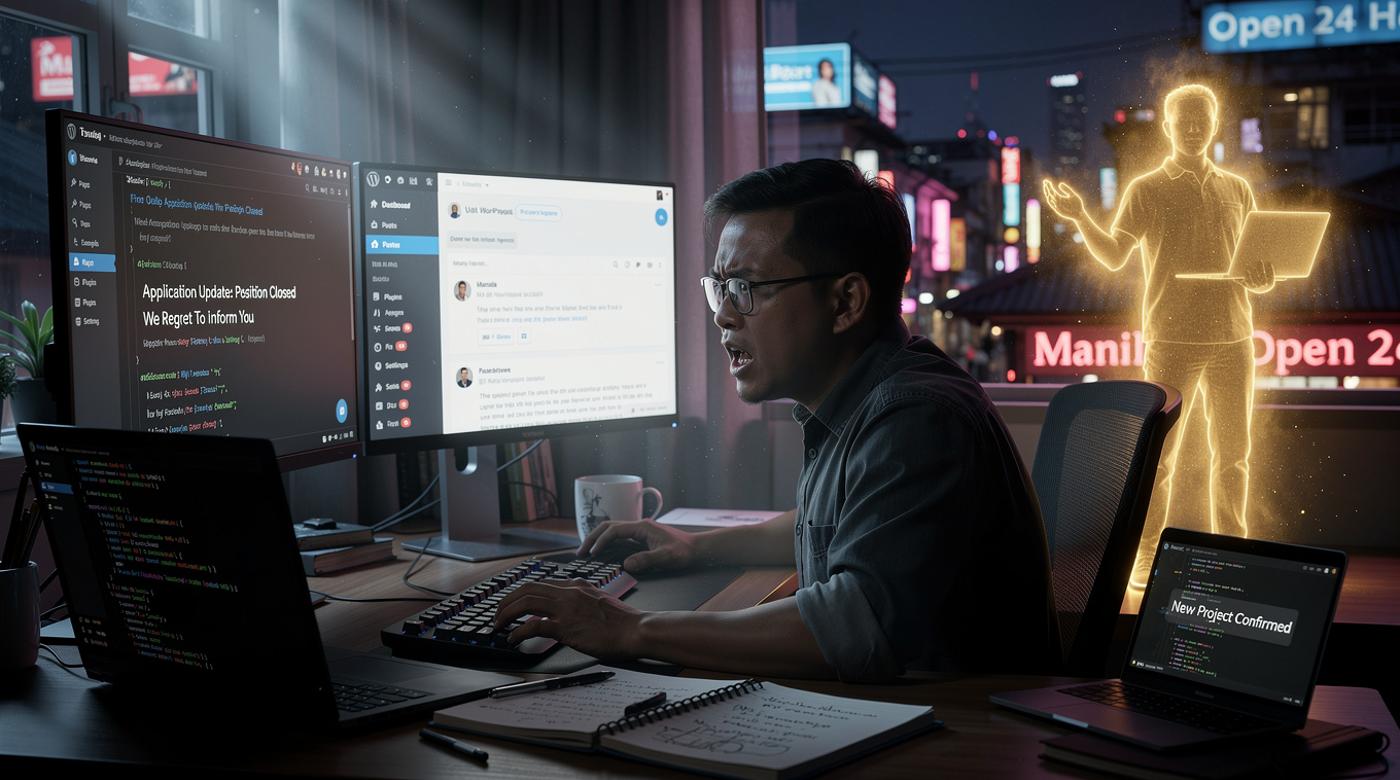
The Philippine web development landscape in 2026 is a paradox of abundance and scarcity. While the country boasts over 1.3 million IT professionals and graduates 47,000 new tech talents annually, a stark divide has emerged between formally educated developers and a wave of self-taught, quick-to-hire WordPress specialists. This article dissects the market forces, skill gaps, and hiring trends that are creating a job crisis for legitimate Filipino developers, as they compete against a fast-moving, low-cost alternative that often prioritizes speed over substance.
Massive Talent Pool, Uneven Skills
The sheer volume of talent is staggering. The Philippines produces approximately 190,000 software engineers and developers, with tens of thousands of new graduates entering the workforce each year. However, this abundance masks a critical problem: the skill level among these professionals varies wildly. A fresh graduate from a top university may possess strong theoretical knowledge but lack practical application, while another from a less rigorous program might struggle with fundamental programming concepts. This inconsistency frustrates employers, who must sift through hundreds of applications to find candidates who can actually deliver on real-world projects. The result is a market flooded with applicants but starved of reliably skilled talent, creating an opening for those who can demonstrate immediate, if narrow, utility.
WordPress Dominance Fuels Quick Hires
A glance at Philippine job boards like Indeed reveals a clear trend: WordPress is king. Listings for 'WordPress Developer' or 'PHP/WordPress Specialist' dominate, often requiring only basic HTML, CSS, and familiarity with themes and plugins. The barrier to entry is remarkably low; motivated individuals can acquire enough skills to land entry-level gigs within a week of focused learning. This accessibility fuels a constant stream of quick hires who can churn out simple websites, blogs, or e-commerce stores for small to medium businesses. For clients with straightforward needs and tight budgets, these quick learners present an attractive, fast solution, sidelining developers with broader but less immediately applicable skill sets.
Legit Devs: School Skills Don't Always Apply
Formal education, typically a Bachelor’s degree in Computer Science, IT, or related fields, provides a solid foundation in theory, algorithms, and software engineering principles. Yet, there's a growing disconnect between academic curricula and industry demands. Many graduates emerge proficient in languages like Java or C++ but have little to no experience with the modern web stacks, such as React, Next.js, TypeScript, or cloud platforms like AWS, that dominate job postings. Schools often lag in updating their programs to reflect rapid technological shifts, leaving students to bridge the gap through self-study or internships. Consequently, employers view new grads as requiring significant training, whereas quick WordPress hires can ostensibly 'hit the ground running' on specific tasks, even if their overall depth is shallow.
Hourly Rates Expose the Divide
The compensation landscape vividly illustrates the market's bifurcation. On freelance platforms and in local hiring, rates stratify sharply:
- Junior Developers (Legit): $10–$20 per hour. These are often recent graduates or those with 1–2 years of experience, struggling to compete against lower-cost alternatives.
- Senior Developers (Legit): $35–$55+ per hour. Experienced professionals with niche skills (e.g., DevOps, AI integration) command premiums, but such roles are scarce.
- Quick WordPress Hires: $5–$15 per hour. They undercut at the low end, capturing a high volume of small projects that legitimate juniors might otherwise use to build experience. This rate disparity pushes legit developers to either accept lower pay for survival or invest heavily in upskilling to reach premium niches, while quick hires thrive on volume in the crowded low-end market.
Job Ads: WP Everywhere, Advanced Skills Rare
An analysis of Indeed Philippines listings in early 2026 shows a clear skew toward immediate, practical needs over advanced development. Common postings include:
- WordPress Developer: Crafting and maintaining sites with themes/plugins.
- Shopify Specialist: Setting up and customizing e-commerce stores.
- Basic Full-Stack Developer: Often requiring PHP/Laravel or MERN stack for simple web apps.
- Frontend Developer (React/JS): For dynamic interfaces, but many roles still tie to CMS platforms. In contrast, specialized roles like DevOps Engineer, AI/ML Developer, or Blockchain Specialist appear far less frequently. These niches demand proven expertise and portfolios, which many legit developers lack without significant self-directed projects, creating a catch-22 where they can't get hired without experience but can't gain experience without being hired.
Full-Time Salaries: Comfort for Seniors Only
Full-time employment offers stability but reveals similar divides. Salary ranges in the Philippines reflect experience and specialization:
- Junior Developers: 800–1,500 USD per month (approx. PHP 45,000–85,000). Often stuck in roles with high competition from quick hires.
- Mid-Level Developers: 1,500–2,500 USD per month (PHP 85,000–140,000). Requires 3–5 years of experience and demonstrable skills.
- Senior Developers: 2,200–4,400+ USD per month (PHP 125,000–250,000+). Reserved for those with 5+ years and niche expertise (e.g., cloud architecture, advanced JavaScript frameworks). Quick WordPress hires typically occupy the lower end of the junior range or work as freelancers, but their ability to secure roles quickly blocks entry for fresh graduates who might offer more long-term potential but lack immediate deliverables.
Frontend/Backend Glut vs Niche Gaps
The talent distribution highlights oversaturation in mainstream areas versus lucrative shortages in specialized fields. A comparison of common versus scarce skills underscores this imbalance:
| Oversaturated Skills (High Competition) | Scarce Skills (Premium Demand) |
|---|---|
| JavaScript, React, PHP | DevOps (AWS, Docker, Kubernetes) |
| Basic Frontend/Backend Development | AI/ML Integration, Data Science |
| WordPress, Shopify Customization | Blockchain Development |
| Laravel, Node.js for Simple Apps | Enterprise Architecture |
Legit developers often train in the left column, facing fierce rivalry from both peers and quick hires, while opportunities in the right column require additional, often self-taught, expertise that schools rarely provide.
Hiring Platforms Favor Pre-Vetted Speed
Global platforms like Toptal or Upwork's top tiers cater to clients willing to pay premium rates ($50–100+ per hour) for vetted senior developers with proven track records. These platforms bypass the quick-hire market by emphasizing rigorous screening and quality assurance. However, in local Philippine contexts, job boards and Facebook groups prioritize speed and cost-efficiency. Clients seeking a simple website fix or a quick Shopify setup often turn to these channels, where quick WordPress hires excel by offering fast turnarounds at low prices. This dichotomy means legit developers must either compete on global platforms (requiring elite skills) or navigate a local market saturated with low-cost alternatives.
Entry-Level Trap: 21+ Jobs, High Barriers
A pervasive issue is the 'entry-level paradox': job postings for junior positions frequently demand 2–3 years of experience, creating an impossible barrier for fresh graduates. Employers, burned by inconsistent skill levels, seek candidates who can contribute immediately. Quick WordPress hires circumvent this by building portfolios through small gigs or even fabricating experience, presenting themselves as 'self-taught experts' with a few months of practice. Legit developers, bound by academic timelines and often lacking substantial project work, find themselves locked out, forced to take unpaid internships or further education to bridge the gap, while their quicker counterparts seize available opportunities.
Remote Work Shifts Demand Practical Proof
The rise of remote work, particularly with companies in North America or Europe, has shifted demand toward practical, demonstrable skills. Many roles require night shifts (e.g., 8 PM–5 AM PHT) with a 10%+ pay premium, but they also emphasize Agile/SCRUM methodologies, UX/UI design principles, and collaborative tools like Git. Academic theory often falls short here; employers want to see GitHub repositories, live projects, and problem-solving abilities. Quick learners adeptly mimic these requirements by focusing on portfolio-building in high-demand areas like WordPress, while legit developers may struggle to translate theoretical knowledge into tangible proofs without guided experience.
Why WP Wins: Client Needs Quick & Cheap
At its core, the quick-hire model thrives because it aligns with client priorities. Most small to medium businesses in the Philippines and abroad need functional, scalable websites quickly and affordably. Mainstream CMS platforms like WordPress and Shopify offer out-of-the-box solutions that require minimal customization for basic needs. Hiring a specialized MERN or LAMP stack developer for a simple blog or online store is often overkill, both in cost and complexity. Quick WordPress hires deliver exactly what's needed: a fast, cheap, and functional product. This pragmatic client approach sidelines developers with broader, more expensive skill sets, unless they can articulate value in terms of scalability, security, or advanced features that most clients don't initially prioritize.
Upskilling Lag in Modern JS & Cloud
While there's a growing pool of developers learning modern technologies like Next.js, TypeScript, and cloud services, deep expertise remains scarce. Schools are slow to integrate these into core curricula, leaving legit developers to upskill independently, a time-consuming process that quick hires often bypass by focusing on immediately marketable, narrower skills. For example, learning AWS or Docker in depth requires months of study and practice, whereas mastering WordPress theme development might take weeks. This lag means that even as demand for advanced skills grows, the supply of truly proficient developers increases slowly, perpetuating the premium for those who have invested the time and the struggle for those caught in transitional phases.
Cultural Fit via Local Networks
In the Philippines, hiring often hinges on cultural fit and personal networks. Facebook groups, Discord communities, and referrals from friends or former colleagues play a significant role in job placements. Quick WordPress hires, often active in these communities, build reputations for reliability and fast delivery, even if their technical depth is limited. They become the 'go-to' person for quick fixes, edging out legit developers who may lack these connections or focus more on technical forums than social networking. This cultural element means that being skilled isn't enough; being known and trusted in the right circles is equally critical, a challenge for developers who prioritize solitary coding over community engagement.
Premium Agencies Absorb Risk, Not Devs
Many clients mitigate hiring risks by working through premium agencies or managed service providers, which charge 30–50% markups to vet, manage, and guarantee developers. These agencies absorb the risk of bad fits, offering clients peace of mind. However, this model often sidelines individual developers, especially those without agency affiliations. Quick WordPress hires sometimes slip through cracks in less formal settings, but in agency contexts, the focus is on proven talent, benefiting legit seniors while making it harder for juniors to break in. This system protects clients but can perpetuate the divide, as agencies prefer low-risk, experienced hires over untested talent, even if that talent has strong foundational skills.
Conclusion
To bridge the gap, legitimate Filipino web developers must pivot strategically. The key is to move beyond theoretical knowledge and build irrefutable proof of skill through portfolios, especially in scarce niches like AI integration, DevOps, or enterprise-grade applications. While quick WordPress hires will continue to dominate the low-end market, there remains a premium for depth, scalability, and innovation. By focusing on continuous learning, community engagement, and demonstrable projects, legit developers can carve out sustainable careers that transcend the quick-hire fray. The future belongs not to those who learn fastest, but to those who build deepest.