Overview
Manila's midnight economy, where 1.8 million Filipinos work overnight in Business Process Outsourcing (BPO) centers to serve Western clients, generates $38 billion annually, accounting for roughly 1 in 50 jobs nationwide. Yet this colossal engine of the Philippine economy, built on centuries of colonial labor-export blueprints, now faces an existential threat: artificial intelligence. By 2026, the industry aims for $42 billion in revenue, but forecasts simultaneously warn that AI could displace 36% of current BPO roles. This is not merely a technological shift; it is the culmination of a historical pattern where the Philippines has been wired as a global service node rather than a self-sufficient industrial power. The coming years will test whether the nation can transition from invisible labor to visible ownership in the AI-driven global economy.
Why the Philippines’ $38 Billion Outsourcing Economy is Reaching a Breaking Point
The Philippine BPO sector is a paradox of staggering scale and profound vulnerability. It employs 1.8 million people directly, approximately 2% of the population, and contributes over 7% to the country's GDP. Revenue targets are ambitious, aiming to grow from $38 billion to $42 billion by 2026. However, this growth narrative masks a seismic underlying risk. A 2023 study by the Asian Development Bank estimated that 36% of current BPO jobs in the Philippines are at high risk of automation by AI and advanced software. The roles most exposed are precisely those that fueled the sector's rise: voice-based customer service, data entry, and basic transactional support. The industry's expansion plans are thus running headlong into a wave of displacement, creating a precarious race between revenue growth and workforce obsolescence.
The Midnight Economy of Manila
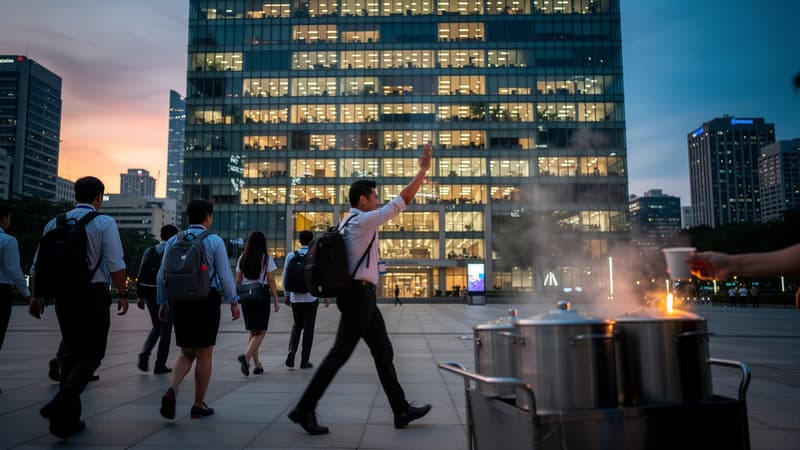
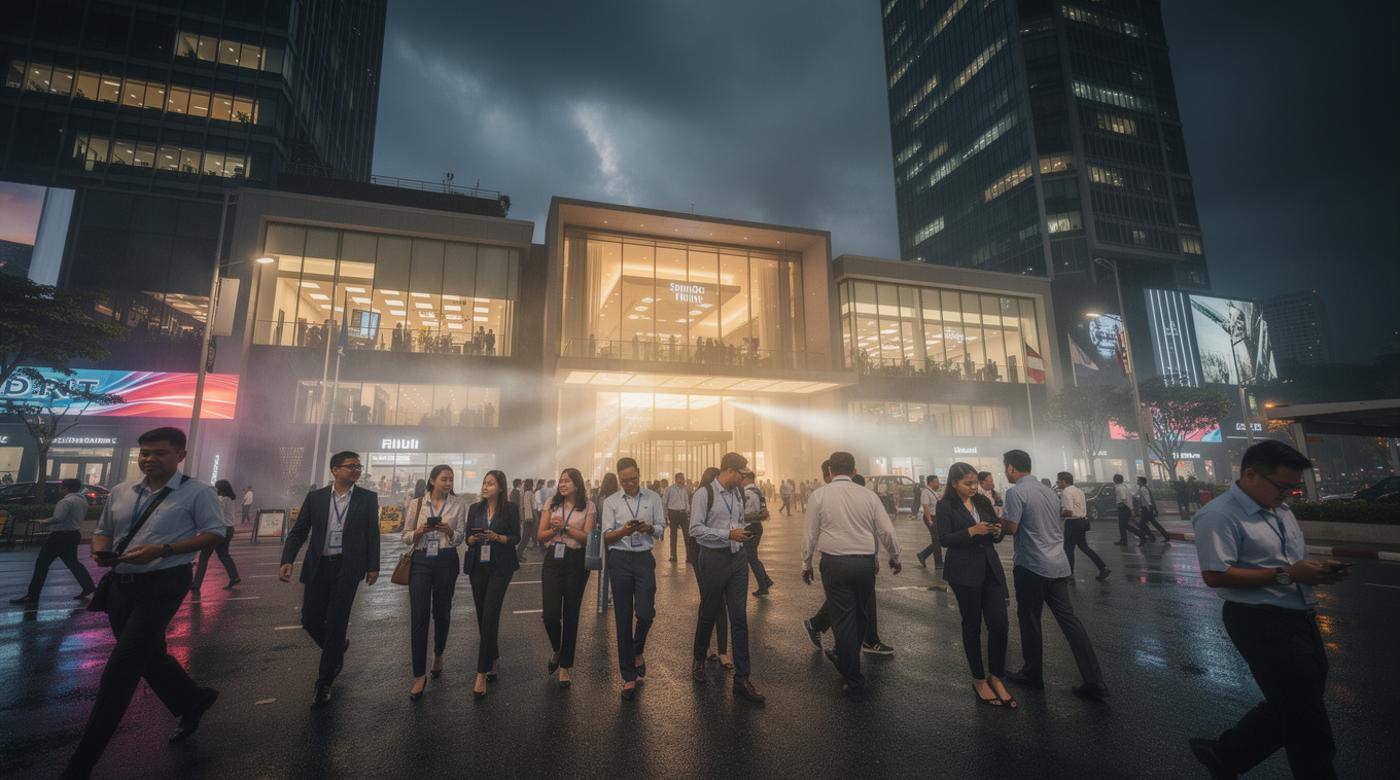
To understand the BPO sector's cultural and economic footprint, one must witness Manila after dark. At 1 AM, the financial districts of Makati and Bonifacio Global City pulse with life. Office towers blaze with light as thousands of Filipinos, often young, college-educated, and fluent in American English, begin their shifts synced to business hours in New York or Los Angeles. This "midnight economy" is sustained by a broader gig workforce of 9.9 million Filipinos (about 22% of the labor force), who power delivery, freelance, and platform-based work. The surreal normalcy of this reversed circadian rhythm has become a national hallmark. Yet, it is precisely this human-powered, time-zone-arbitrage model that AI threatens to dismantle. AI agents do not sleep, demand no overtime pay, and can operate 24/7 at near-zero marginal cost, eroding the very temporal advantage that built Manila's BPO empire.
The Centuries-Old Blueprint: A 'Port for the World'
The Philippines' position as a global labor depot is not an accident of the 21st century; it is the legacy of 400 years of colonial economic design. Successive regimes structured the archipelago not for internal industrial development, but for extraction and service to external powers. This created a "plug-and-play" nation, excellently equipped to export compliant, English-speaking labor, but with a stunted manufacturing base and a dependency on remittances and outsourcing revenue. The modern BPO boom is merely the latest iteration of this historical template, where human capital is the primary export commodity.
Spanish Colonial Structure (1565–1898)
The Spanish encomienda system established the foundational logic of extractive economics. Under this system, Spanish encomenderos were granted tracts of land and the right to collect tribute from the indigenous population in the form of goods, money, or labor. This was complemented by the polo y servicios, a system of forced labor (often 40 days per year) used to build infrastructure like churches, roads, and ports that served the colonial trade routes, most notably the Manila-Acapulco Galleon Trade. The legacy was twofold: first, it oriented the economy toward servicing external trade flows rather than building self-sustaining local industry. Second, it normalized the concept of large-scale, low-cost labor mobilization for external benefit, a pattern that would echo for centuries.
American Interface (1898–1946)
American colonization systematically engineered the human infrastructure for 20th-century labor export. A primary tool was the imposition of a universal, English-based public education system. As President William McKinley's 1900 instructions stated, the goal was to "educate the Filipinos" in the language and systems of the United States. This created a scalable pipeline of export-ready professionals. A telling case is the 1948 Exchange Visitor Program (EVP), which brought Filipino nurses to the U.S. for training. By 1977, Manila was producing 12,000 nurses annually, most destined for overseas contracts. This model proved that the Philippines could reliably produce large volumes of Western-compatible white-collar and professional workers, a blueprint perfectly suited for the BPO boom decades later.
The Pivot to Exporting People
The modern system was formally codified in 1974 under President Ferdinand Marcos. Facing rampant unemployment and political unrest, Marcos signed Presidential Decree No. 442, institutionalizing the overseas employment program. What began as a stopgap measure evolved into a national economic strategy. Today, over 10 million Filipinos work abroad, and their remittances, totaling roughly $38 billion in recent years, rival the entire revenue of the BPO sector. The two flows are intertwined: remittances stabilize household consumption, while BPO jobs provide domestic "outsourced" employment. This dual dependency has trapped the economy in a cycle of human export, making the $42 billion BPO target for 2026 not just a goal, but a necessity for stability, even as the model's foundations crack.
The 'Human' Edge: Overtaking India
The Philippines didn't just join the global BPO race; it came to dominate the voice segment, overtaking India in the 2010s. This victory was won on distinctly human terrain. Filipino agents were prized for their neutral English accent (a legacy of American schooling) and cultural traits deeply suited to customer service: pakikisama (smooth interpersonal relationships), hiya (a sense of shame that enforces professionalism), and utang na loob (debt of gratitude, fostering loyalty). These "soft skills" created a perceived warmth and empathy that algorithms struggled to replicate. The cruel irony is that these same human interactions are now the training data for the AI poised to replace them. When fintech giant Klarna announced its AI assistant was doing the work of 700 full-time customer service agents, it signaled that the very empathy that built the Filipino edge is now being codified, automated, and deployed at scale.
The Economic Reality: A Broken Social Contract
Beneath the macro numbers lies a brutal math of survival. The average monthly minimum wage in the Philippines is approximately $250, while a family living wage is estimated at $460. This gap forces relentless credential inflation and side hustles. A registered nurse might earn $350 a month in a public hospital locally, but can earn $800 or more as a virtual assistant for a Western client. When formal paths fail, desperation fuels ventures like the 2021 Axie Infinity craze, where Filipinos turned to play-to-earn crypto games as a primary income source, highlighting the fragility of the traditional labor contract. The BPO sector, with its relatively higher wages, became a lifeline, but it is a lifeline now under direct attack from cost-cutting automation.
The Cruel Irony of AI: Training Your Replacement
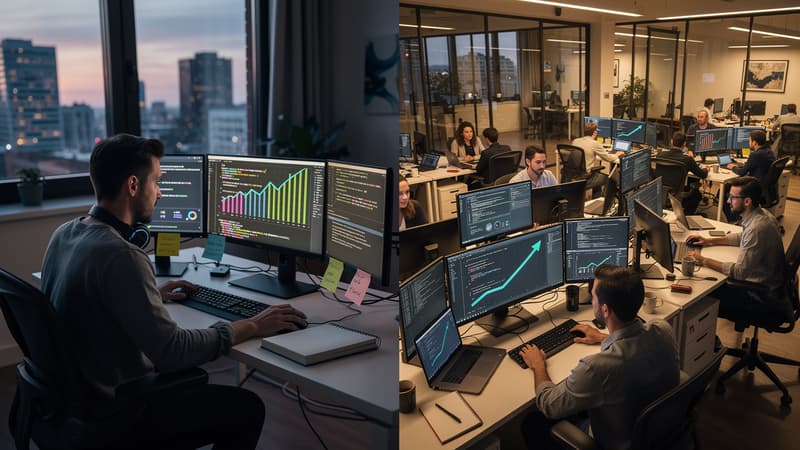
The disruption is not a distant future scenario; it is already underway in the sector's shadows. Platforms like Remotasks and Scale AI employ thousands of Filipinos as "data labelers" and "AI trainers." Their task? To annotate images, transcribe audio, and categorize text, essentially teaching machine learning models how to understand the world. For this, pay has plummeted to as low as 30 cents per hour on some tasks. These workers are literally annotating their own obsolescence. By 2026, the next wave will hit the core: AI voice agents that can mimic Filipino warmth, patience, and accent at a fraction of the cost. The business case for labor arbitrage is collapsing, pushing global firms to invest not in more call centers, but in "agentic AI" that operates autonomously.
AI Agents and 24/7 Empathy
The future of global outsourcing is being redefined. The market is projected to reach $490 billion by 2030, but growth will be driven by AI integration, hyper-specialization, and complex processes like telehealth and HIPAA-compliant data management. The Philippine IT and Business Process Association (IBPAP) recognizes this, pivoting its 2026 roadmap towards "high-value" services like AI operations, cybersecurity, and healthcare information management. However, the competition is fierce. Neighbors like Malaysia and Vietnam are aggressively courting the same investments in the battle for a share of Southeast Asia's $260 billion digital economy. The Philippines' historical advantages in language and culture are no longer a moat; they are merely a starting point in a race that will be won by technological adoption and strategic innovation.
Conclusion: From Invisible Labor to Visible Ownership
The Philippines stands as a canary in the coal mine for all gig and outsourcing economies. Its history, from colonial extraction to the 2013 "pork barrel" scandal where development funds were siphoned away, shows the perils of relying on a model that exports value rather than building owned assets. The path forward requires a fundamental shift: leveraging the existing workforce not for micro-tasks, but for AI management, system supervision, and creative problem-solving. Forecasts still predict 1.97 million direct BPO jobs by 2028, and government incentives through bodies like PEZA remain strong. Resilience will come from moving up the value chain, from providing the labor that trains AI to building and owning the AI solutions themselves. The breaking point is also a pivot point: the moment to transition from a history of invisible labor to a future of visible, technological ownership.