Overview
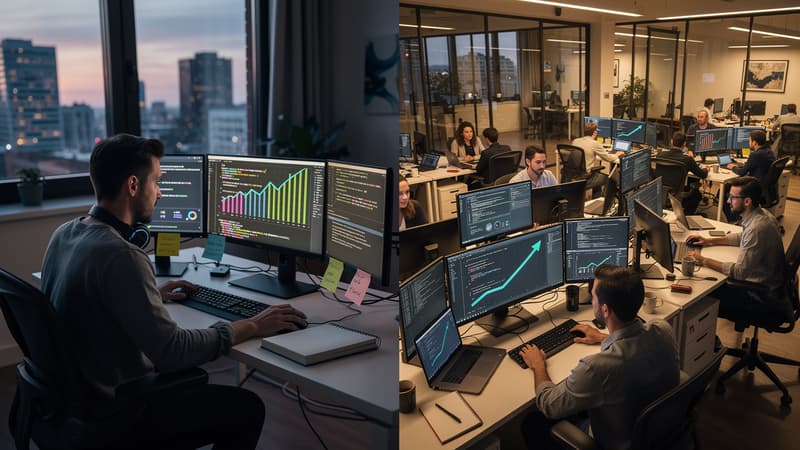
Artificial intelligence in 2026 has evolved far beyond chatbots and image generators. Systems now act autonomously, orchestrating multi-step tasks in industries from manufacturing to drug discovery trigyn.com. Developers and enterprises harness agentic AI, intelligent agents that decide, execute, and collaborate without constant human input, driving productivity surges like software development timelines slashed from weeks to hours.
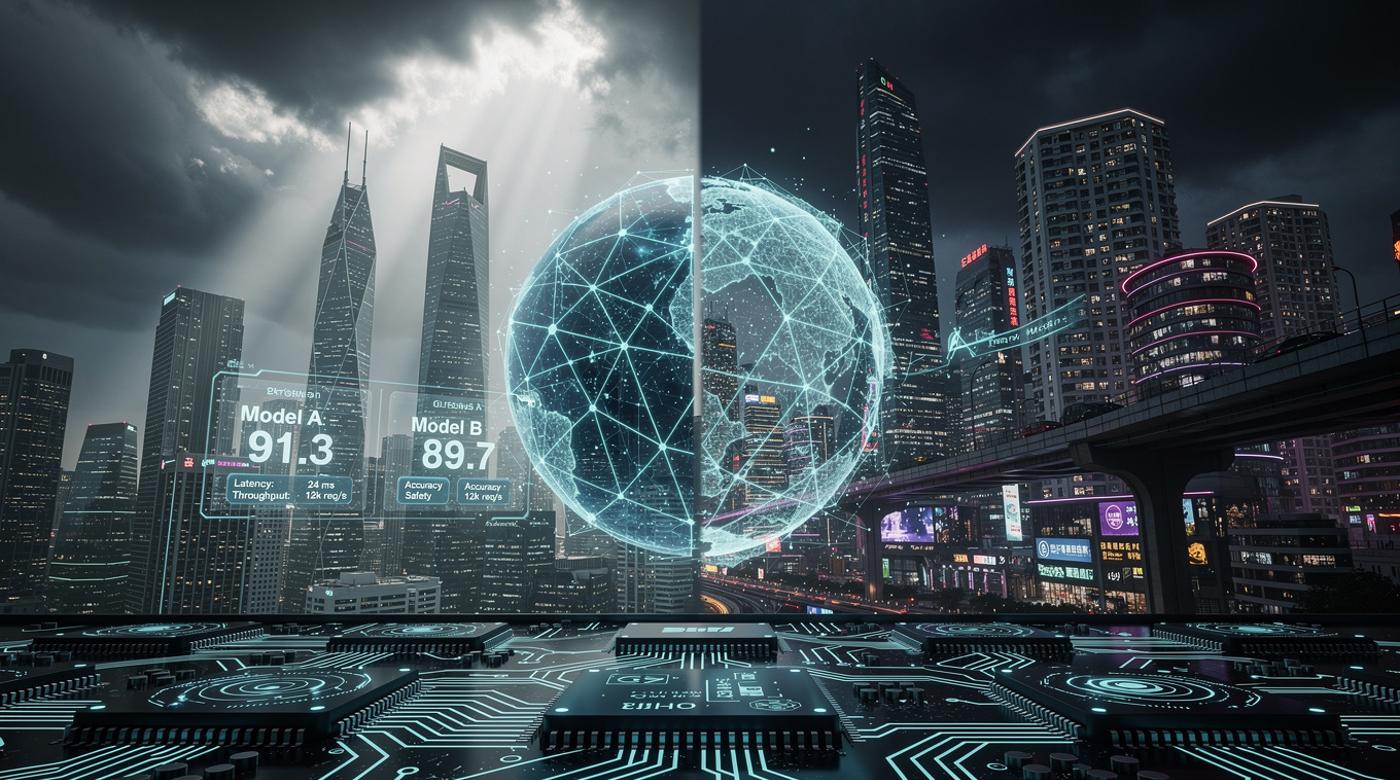
Yet perceptions swirl that the USA, long the AI frontrunner, faces stiffer competition. Countries like China, with massive state-backed investments, and Europe, emphasizing ethical AI, are advancing rapidly. Claims of foreign AI surpassing American tech often stem from specific benchmarks in efficiency or scale, but evidence shows a nuanced global race rather than outright dominance ibm.com. This article examines cutting-edge capabilities, international efforts, and whether the 'USA lag' narrative holds water.
Readers will gain clarity on transformative trends, real-world applications, and balanced insights into geopolitical dynamics shaping AI's future.
New AI Capabilities in 2026
Agentic AI leads the charge, shifting from passive tools to autonomous collaborators. These systems handle complex workflows, planning vacations, debugging code across repositories, or managing supply chains, by breaking tasks into steps, verifying outputs, and adapting in real time. Unlike earlier models limited to single queries, agents now feature expanded context windows and human-like memory, enabling persistent learning from interactions infoworld.com.
Self-verification mechanisms further boost reliability. AI agents incorporate internal feedback loops to detect and correct errors autonomously, reducing the error buildup in multi-hop processes that plagued prior iterations. This makes them viable for enterprise-scale operations, from financial risk modeling to robotic logistics.
Generative AI has matured into domain-specific powerhouses. Beyond creative content, it accelerates scientific breakthroughs: simulating climate models, discovering drugs via protein folding predictions, and optimizing materials in manufacturing. Multimodal models integrate language, vision, and action, interpreting medical scans while generating reports or guiding robots.
Edge and on-device AI bring intelligence to smartphones, IoT sensors, and wearables. Efficient models, optimized for hardware like ASICs and chiplets, process data locally for privacy-sensitive tasks such as real-time translation or predictive maintenance, without cloud dependency.
Quantum-AI hybrids emerge as game-changers. IBM predicts 2026 as the year quantum computers outperform classical ones in niche problems, like molecular simulations for drug development, amplified by AI pattern recognition.
English-as-code blurs lines between natural language and programming. Developers describe apps in prose, and AI generates, tests, and deploys functional software, revolutionizing coding productivity.
| Trend | Key Capability | Impact |
|---|---|---|
| Agentic AI | Autonomous multi-step execution | Enterprise workflows 10x faster |
| Edge AI | On-device processing | Privacy gains, real-time decisions |
| Multimodal | Vision + language + action | Healthcare diagnostics, robotics |
| Quantum-AI | Complex simulations | Drug discovery breakthroughs |
| Self-Verification | Error correction | Scalable agent reliability |
These aren't hypotheticals; they're deployed in production, reshaping economies.
Global AI Efforts Beyond the USA
China dominates non-US advancements, investing over $100 billion annually in AI infrastructure via state programs like 'Made in China 2025.' Huawei's Ascend chips rival Nvidia's GPUs, powering massive clusters for training models like DeepSeek, which compete on open benchmarks. Chinese firms lead in efficient, domain-specific models, smaller yet outperforming giants in tasks like math reasoning or coding, thanks to vast datasets from 1.4 billion users.
What exactly are they doing? Baidu's Ernie models drive autonomous vehicles tested across Beijing, while Alibaba optimizes e-commerce logistics with agentic systems predicting demand shifts in real time. In robotics, UBTech deploys humanoid bots in factories, outperforming Boston Dynamics in cost and scale for repetitive tasks.
Europe counters with regulation-fueled innovation. The EU AI Act fosters 'trustworthy AI,' spurring firms like Mistral (France) to release open-source models like Mistral Large, fine-tuned for European languages and privacy. Germany's Fraunhofer Institute pioneers industrial AI for manufacturing, integrating edge agents into Siemens machinery for predictive maintenance.
Singapore and South Korea excel in applied AI. Singapore's AI Singapore initiative deploys multimodal systems in healthcare, analyzing scans with 95% accuracy rivaling US labs. South Korea's Naver and Kakao power HyperCLOVA models for K-pop content generation and smart cities, with agentic traffic management reducing congestion by 30%.
India surges in open-source contributions, with models like Krutrim tailored for 22 official languages, enabling voice AI in rural banking. Israel's mobileye leads vision AI for self-driving, deployed globally.
These nations prioritize scale (China), ethics (Europe), and application (Asia), creating specialized strengths.
China's Specific Projects
- DeepSeek-V3: Open-source model beating Llama 3 on coding benchmarks, trained on domestic chips.
- Pangu Weather: Predicts typhoons 10 days ahead with higher accuracy than US counterparts.
- National AI Labs: 10+ facilities training exascale models for biotech, claiming leads in protein design.
Perceptions of Foreign AI Superiority
Why the narrative that non-US AI is 'more powerful'? Chinese models often top leaderboards like LMSYS Chatbot Arena in cost-efficiency, DeepSeek achieves GPT-4 parity at 1/10th compute. State censorship enables unrestricted data harvesting, fueling larger datasets. Rapid chip production circumvents US export bans on Nvidia hardware.
Europe's models shine in regulated domains; Mistral's efficiency suits edge deployment where US giants falter on power draw. Perceptions amplify via hype, WeChat viral posts tout 'China AGI by 2027,' contrasting US regulatory delays.
Is It True or Hoax?
Not a hoax, but overhyped. US firms like OpenAI, Anthropic, and Google retain leads in foundational models (e.g., GPT-5 equivalents with superior reasoning). Nvidia supplies 90% of AI chips globally, underpinning all advances. Foreign edges exist in niches: China's scale for math/coding, Europe's compliance-ready AI.
Conflicting data persists. Stanford's AI Index notes US publishes 40% of top papers, but China files 70% of AI patents. Epoch AI data shows global compute parity narrowing, China at 20% of US capacity, rising fast.
Balanced view: Competition accelerates innovation. US excels in generality; others in specialization. No single 'winner', hybrid global ecosystems prevail.
| Country | Strength | US Comparison |
|---|---|---|
| China | Efficient models, scale | Leads niches, trails generality |
| Europe | Ethical, open-source | Strong regulation edge |
| S. Korea/India | Applied multimodal | High adoption, lower R&D |
Industry Impacts and Future Outlook
Manufacturing sees autonomous robotics cut downtime 50%. Finance deploys AI risk models spotting fraud patterns humans miss. Retail personalizes at scale, boosting engagement 25%.
Challenges loom: Energy demands strain grids, ethical risks demand governance. Open-source surges democratize access, with IBM's Granite and Meta's Llama enabling custom agents.
Conclusion
AI in 2026 empowers autonomous agents, quantum hybrids, and edge smarts, transforming work and science globally. Non-US nations advance via targeted strategies, China's scale, Europe's trust, but US foundational dominance endures. The 'foreign superiority' buzz mixes truth with exaggeration; true power lies in collaboration.
Key takeaways: Prioritize agentic tools for productivity; monitor global models for efficiency gains; build governance for sustainable scaling. Developers should experiment with open-source like DeepSeek or Granite today. The race intensifies, position accordingly.